Jerri and I are Olympics junkies. We are expert judges in all the sports and know all the rules. At least, we think we do.  But we had one question left this year. Why is it called the skeleton, and who is crazy enough to jump into an ice track head-first?
The answer goes back to St. Moritz, Switzerland, in 1884, when British engineer Major L. P. Child helped formalize the head-first sled on the famous Cresta Run. Around that same time, builders began intentionally stripping the sled down to its essentials. They removed the heavy wooden body and replaced it with a thin exposed metal frame. Nothing decorative. Nothing extra. Just structure.
The result looked exactly like what it was. The skeleton of a sled.
This was not about style. It was about feel. A lighter, bare frame allowed the rider to sense the ice beneath them and steer with subtle shifts of body weight. The sled became an extension of the rider rather than something separate from them.
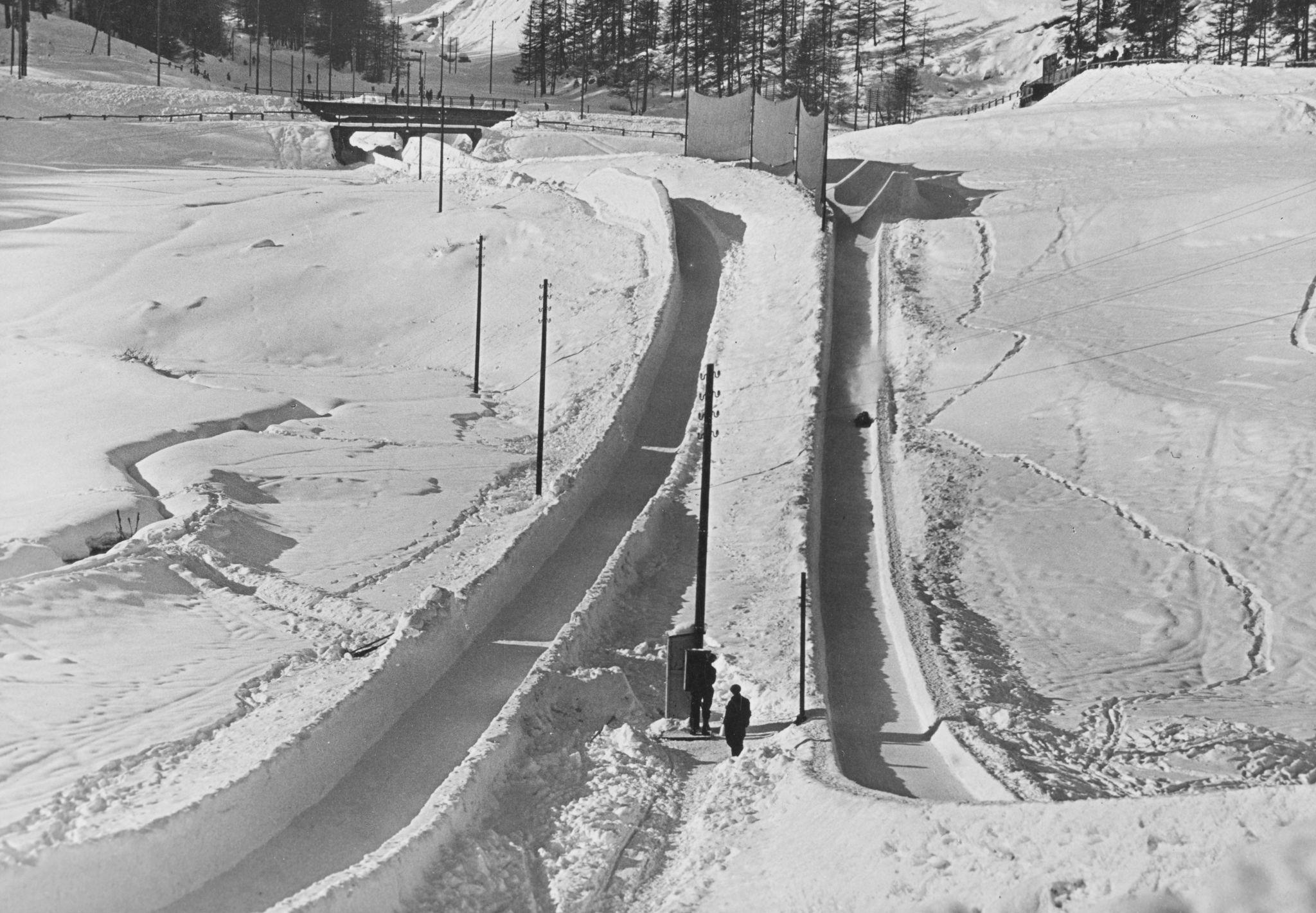
Skeleton made its Olympic debut in 1928 in St. Moritz. It returned once more in 1948 (as pictured), again in St. Moritz, and then disappeared for over fifty years. When it came back in 2002 in Salt Lake City, the materials had improved, but the idea had not changed.
Modern sleds are made with precision steel and strict weight limits, but if you set one beside those early frames, you would recognize it instantly. It is still just a bare structure. Still head-first. Still dependent on balance, nerve, and a willingness to trust gravity more than comfort.
Which brings us back to the original question. Who is crazy enough to do this?
Apparently, just enough people to keep the sport alive for 140 years.