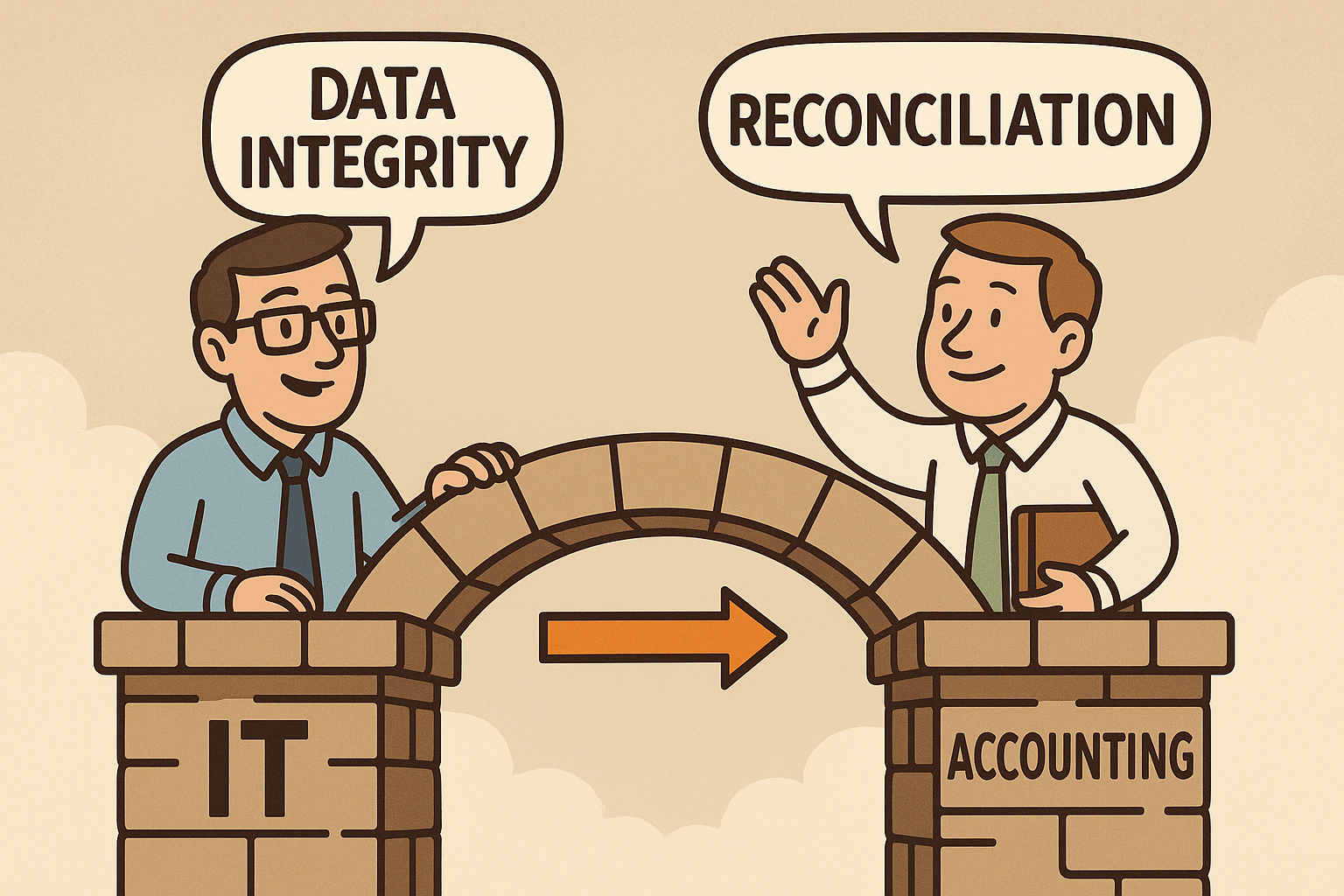
When I start working with a new team — whether as a consultant or in-house — my first order of business isn’t reviewing code, ledgers, or processes.
It’s listening.
Every department has its own language.
Accounting says “close,” IT says “deploy.”
Accounting talks about “reconciliation,” IT calls it “data integrity.”
Both mean the same thing — they’re trying to bring things into alignment.
But when those words aren’t translated, misunderstanding takes root.
Projects stall. Frustration rises. People stop trusting each other’s intentions.
Early in my career, I thought success came from knowing the system inside out. Now I know it comes from learning how people describe their world. The words they choose reveal what they value, what they fear, and how they define success.
In one organization, the accounting team kept saying “we just need visibility.” IT responded by giving them dashboards — beautiful, data-rich dashboards. But what Accounting meant by “visibility” was confidence. They didn’t need more data; they needed assurance that the data could be trusted.
That kind of clarity doesn’t come from software. It comes from empathy.
Bridging IT and Accounting isn’t just about connecting systems — it’s about translating intent.
When you can restate someone’s problem in their language and they nod, you’ve already solved half of it.
If you’re stepping into a new role or project this week, try this simple exercise:
Spend your first day listening for the words people repeat most often.
Then ask what those words mean to them.
That’s where alignment begins — not in the data, but in the dialogue.